The Payoff at the End

On the books I choose, and those that are chosen for me

Recent Reads

Nov 29, 2025

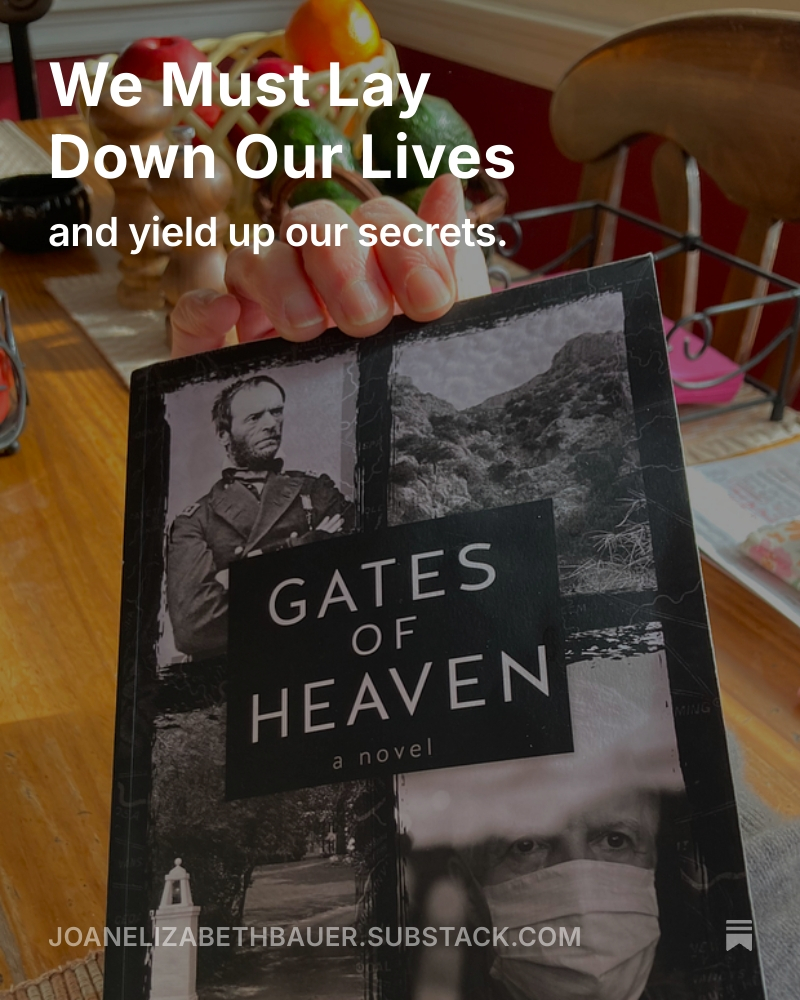
For years, I have chosen my books from my husband’s admittedly rarefied shelves. It was in his collection that I first discovered the worn-out volumes of Proust that I consumed over my lunch hour at work in my mid-twenties. This was right after graduate school, and I was struggling to adjust to my new secretarial job. One day, a man I didn’t know approached me in the employee cafeteria of our venerable Milwaukee bank, nodded at my book, and asked if I would recognize the bank president on sight. When I asked why, he informed me in all seriousness that reading was not allowed here in this cafeteria; employees were expected to socialize over lunch, and the formidable Mr. P. was known to drop in unannounced. I knew no one there with whom I might socialize, and I was too astonished to thank him for the warning. From that day, I ate my peanut butter sandwiches undisturbed with my book in Cathedral Square Park or at the Grand Avenue Mall.

It took me nine months to read all seven volumes of Proust; I bogged down along The Guermantes Way (book three)But the payoff at the end of that volume—when the Duc de Guermantes howls at the Duchesse to go inside and change into her red shoes at a critical moment—was worth every political disquisition I had to slog through. Around that same time, I consumed volumes of Balzac and Flaubert, Eliot and Gaskell, Brontë and Collins, Wharton and James, along with Wallace Stegner and Norman Maclean (it was the nineties). By the time we had children, my reading expanded in all sorts of beautiful ways: Beatrix Potter and A.A. Milne, Virginia Lee Burton and Johnny Gruelle, Richard Scarry and Eric Carle… you know the list.

But then reading turned social.

My husband says he could never join a book club—at any given time, he’s already working his way through some two dozen titles. And I almost said no when a group of my oldest friends invited me to join their book club in the early 2000s, because I cherished my unfettered reading habits too much. One founding member called and insisted that they didn’t want to do it without me, so I said yes. And I didn’t regret it. We spent many lovely evenings at book club together, and when she died in 2009 after a long illness, I asked her in my heart to take my intentions with her to heaven. May she rest in peace.

Book clubs have taught me a lot about surrender. There’s an element of sacrifice, even abandonment in committing to ten or twelve titles a year that others will chose; at an average of ten hours a book, that’s at least one hundred hours of “spoken-for” reading. Many of these books have been gems that I wouldn’t have found otherwise; I first read Kurt Vonnegut and Lois Lowry, Kristen Hannah and Anthony Doerr as book club selections. Even the books that I didn’t enjoy have taught me a lot about craft. Still, I’ll never get back the time I spent reading that singsong-y book about the mother who cuts huge swathes out of the map as impossible places to raise her dysphoric child—the one whose counselor bounces on an exercise ball and talks just like Pee Wee Herman. And I feel sorrowful when I can’t jump into a highly anticipated book because I’ve committed to reading something else for a book club.

So, why do I do it? Am I just looking for social connection—or is there something profound in setting aside my self-will and accepting the preference of another? A book that is chosen for me might be a gift, or it might be a cross that I need to accept; it might be an occasion for discipline, or an instance of “Thy will be done.” When I was younger, I roamed freely over the shelves, pleasing myself. Now, when I read a book that is chosen for me, I am pleasing another—perhaps even serving her, if together we can enjoy the book more or perhaps notice the dangers it might present. Mostly, in reading and talking about it with her, I am giving myself. That’s important to do when my natural impulse is to turn away from conversation in favor of reading. There is something unhealthy for me in being left to my own devices—literal and figurative—for too long.

And so, I can sorrow over all the things I haven’t read, or I can take delight in the book I am reading right now; I can try to compete with the person who’s read more than me, or I can profit from their careful reading of a text I do not know; I can hoard my own choices, or I can humbly accept a recommendation from someone as an offering of their inner life, an invitation to share something they have enjoyed. And I do believe that certain books rise to the top of the pile when God wants us to read them.

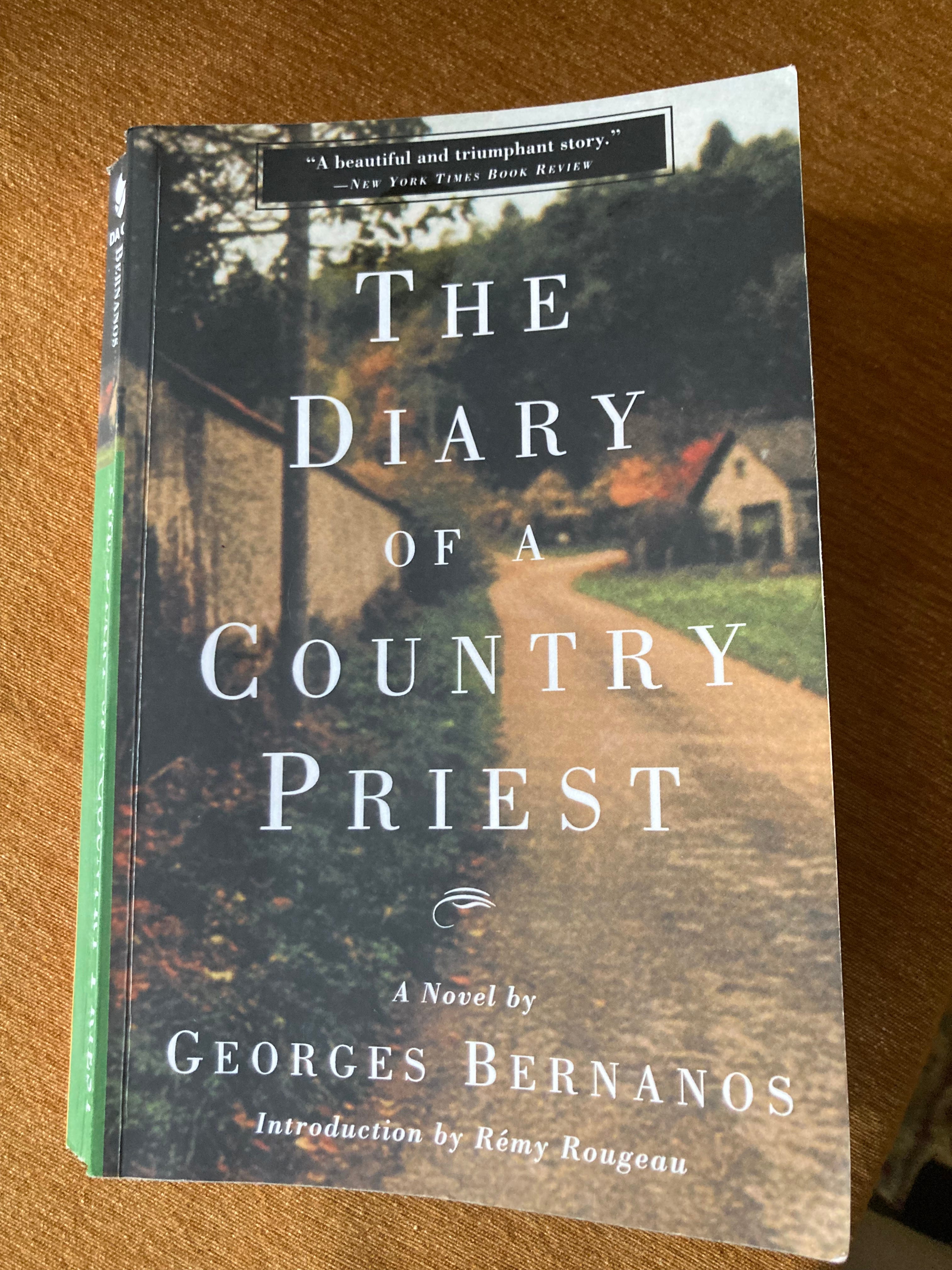
I had added George Bernanos’s The Diary of a Country Priest to my list at least three years ago, but when Dana Gioia mentioned in a podcast that certain critical passages had been restored in the 2002 edition, I was eager to start. Turns out, my husband had purchased the most recent edition earlier in the summer and was already partway through. (I can’t always keep track of what’s in those rotating stacks of his.) I had to wait my turn before we could start our own two-person discussion, but the payoff was every bit as wonderful as he promised it would be.

Early on, the unnamed young country priest of the title recalls his exposure to vice as a lonely, neglected child. He turns fruitfully to Russian literature for solace, particularly Maxim Gorky’s My Childhood:

There’s some of everything in it, as they say. The howling of a moujik under the rods, the screaming of a beaten wife, the hiccup of a drunkard, and the growlings of animal joy, that wild sigh from the loins—since, alas! Poverty and lust seek each other out and call to each other in the darkness like two famished beasts. No doubt I should turn from all this in disgust. And yet I feel that such distress, distress that has forgotten even its name, that has ceased to reason or to hope, that lays its tortured head at random, will awaken one day on the shoulder of Jesus Christ.

What a beautiful and hard-won depiction of divine mercy! The young priest carries deep wounds of abandonment and premature awareness of sin without sacrificing purity of heart; this rare combination wins him pastoral success, but at the steep social price of widespread condemnation. The text can be cryptic, as diaries are. I read some pages over and over just to get the plain sense of them. But the voice of the young priest quickly enthralled me. His strange diet of dry bread and warm, sugared wine leaves him indebted to unscrupulous tradespeople and subjects him to charges of drunkenness; his perhaps ill-advised tête- à-têtes with troubled young women—girls, really, who exhibit sophistication beyond their years—expose him to vilification by those whose consciences need to be pricked. He makes a pilgrimage of his prayer life, crossing vast deserts of dryness while bravely and tenderly admonishing sinners. This particular passage recalls Gertud von le Fort’s Song at the Scaffold, in which the fearful young novice Blanche de la Force takes the name “Jésus au Jardin de l’Agonie:

Isn’t it enough that Our Lord this day should have granted me, through the lips of my old teacher, the revelation that I am never to be torn from that eternal place chosen for me—that I remain the prisoner of His Agony in the Garden. Who would have taken such an honor upon himself?

In the end, the young priest arrives at a pitch of forgiveness and renunciation worthy of any saint. The trouble with his life, he says, is that “there was no old man in me, ” and thus he has “loved without guile:”

And so I find great joy in thinking that much of the blame, which sometimes hurt me, arose from a common ignorance of my true destiny.

Of course, I can’t tell you about the payoff without spoiling the book, but it’s definitely worth it. “Grace is everywhere,” the young priest says. Even—perhaps especially—in a book someone else has chosen for me to read.

***

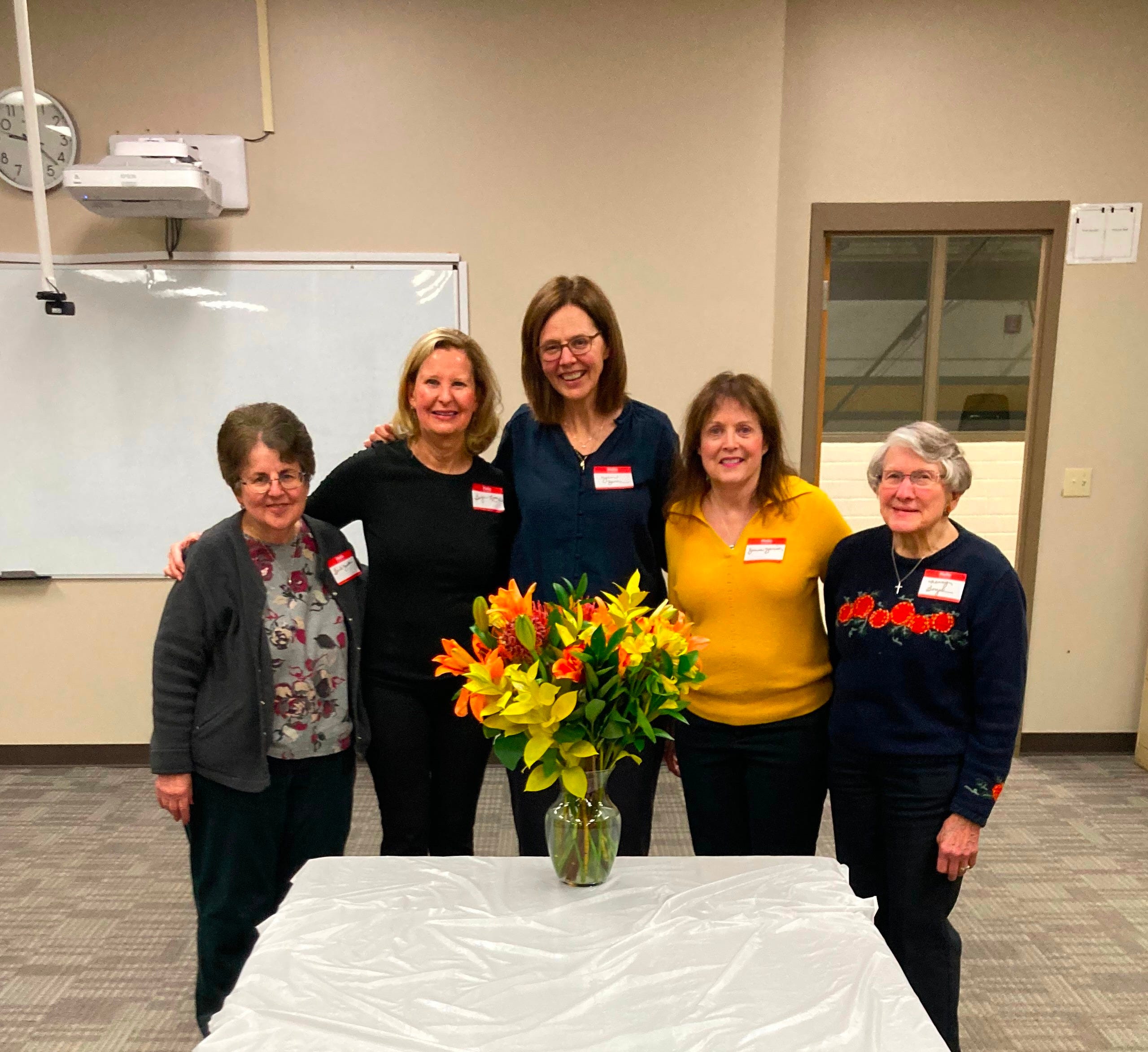
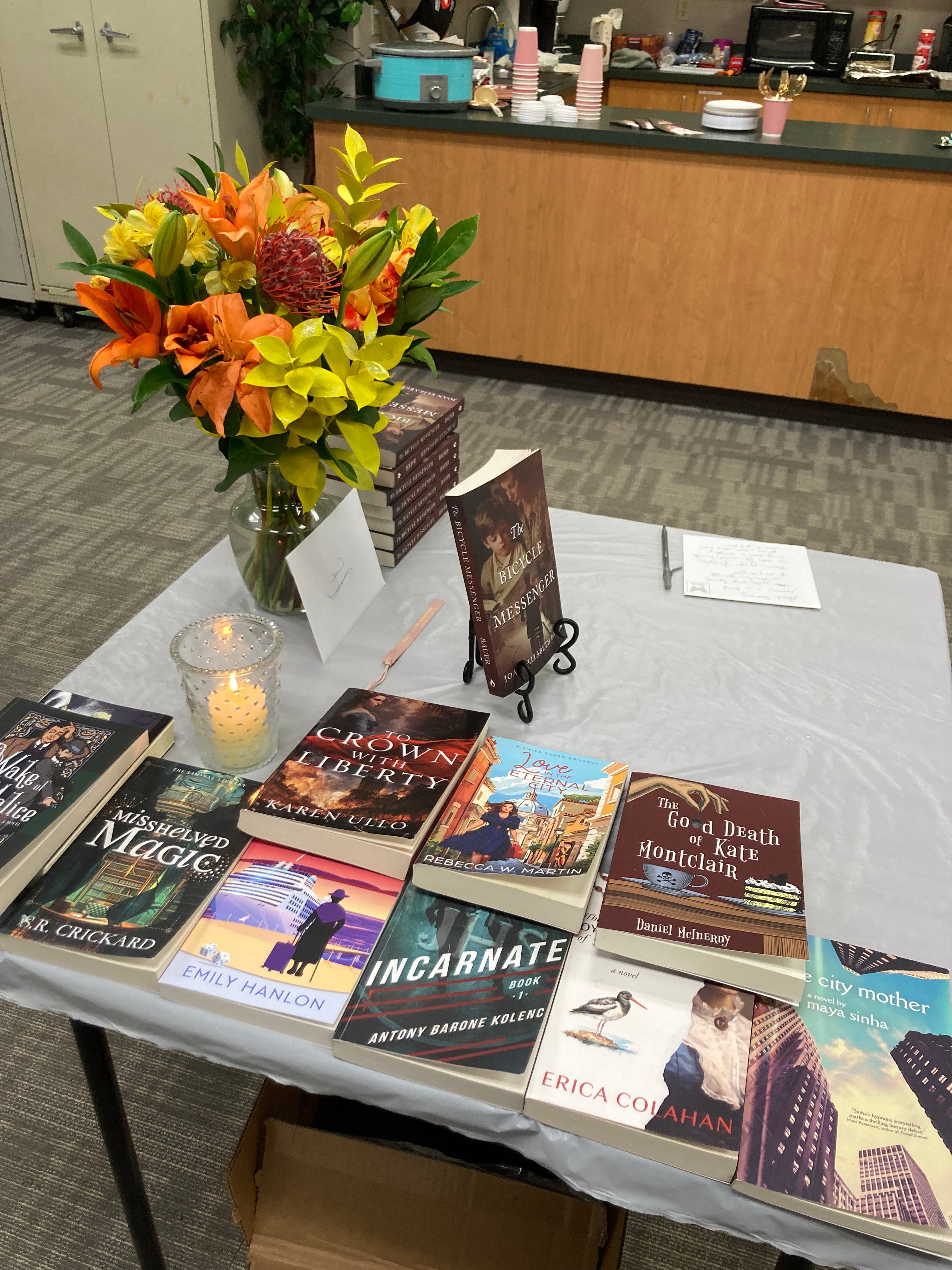
In other news, I had a wonderful time speaking to the Women of St. Jude on Tuesday, November 11 about my journey to publication. The delightful ladies pictured here created such a generous and hospitable atmosphere for all of us, complete with cider, charcuterie, and homemade desserts. In addition to reading from The Bicycle Messenger, I brought a number of Chrism Press titles for “show and tell.” As you can see, my collection is growing—my copies of the first two Molly Chase books are on loan, so they are not pictured. Everyone was very interested in the array of good Catholic fiction on offer.

I was also very pleased to learn that The Bicycle Messenger received the Seal of Approval from the Catholic Writers Guild. This designation assures Catholic readers and booksellers that the book will not offend their faith and that it is appropriate to promote in a Catholic setting. Thank you to the dedicated reviewers who provide this service through the Guild!

Bells are Ringing

Back to Basics
Recent Reads

Oct 27, 2025

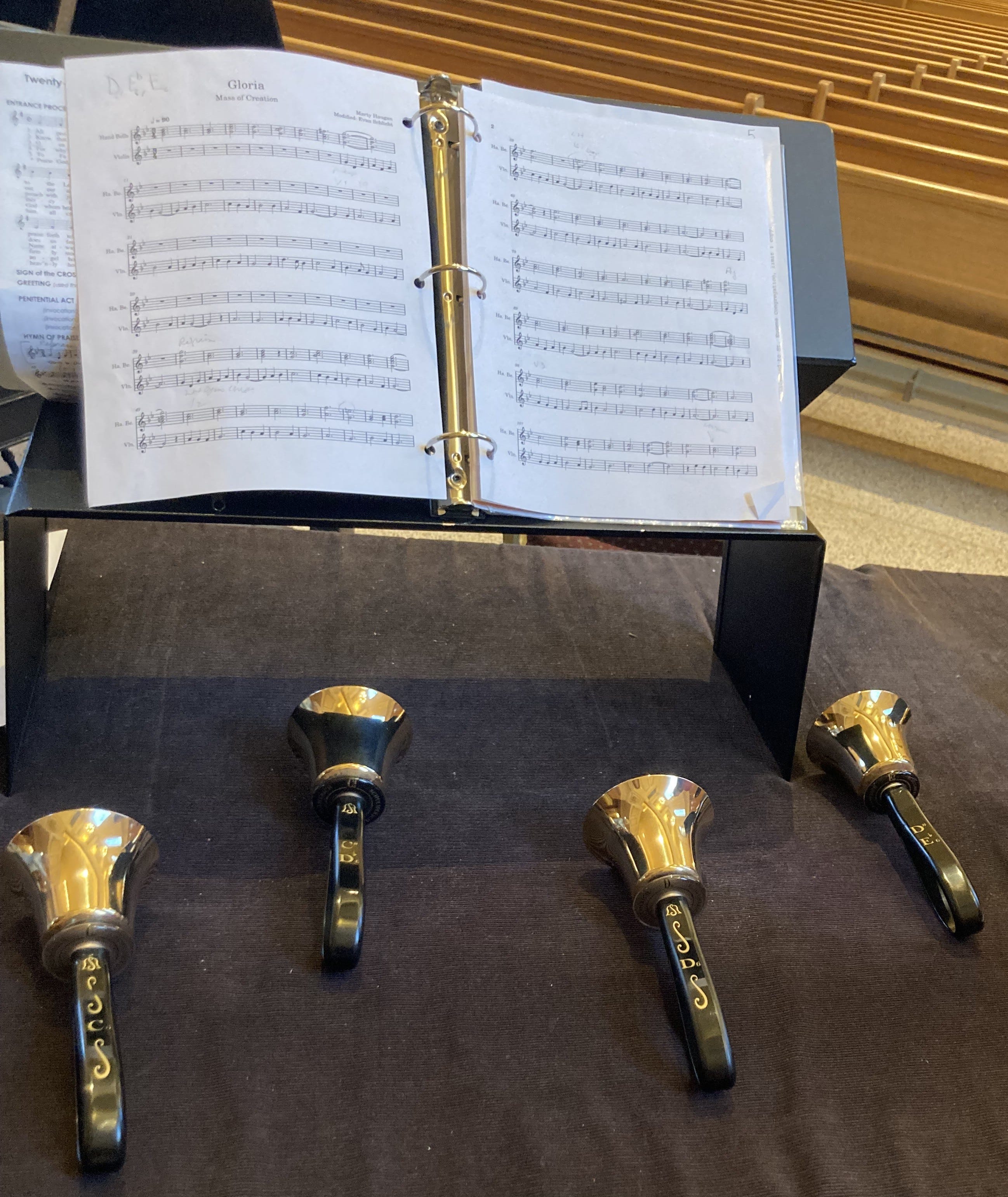
I can’t tell you how happy I am that our new Director of Music has reinstituted the handbell choir at our parish! As you may remember, I was crushed when our former director took a new job last spring, prematurely ending our season. And while some of us made the decision not to continue (a few people were traveling long distances from other parishes), we are now a group of four and hopefully growing.

Everything looks very different from this new perch. We’re getting back to basics on our musical skills, and this has been a real exercise in humility for me. There’s no fancy knocking with two bells in one hand for me now—and no pieces without piano accompaniment just yet, a great blessing when you consider how easy it is to wander off the rails a cappella. Because of our numbers, Evan has also devised new arrangements, wisely opting in favor of accuracy by assigning us just two bells each, with perhaps an accidental or two.

As a choir director, Evan is like a kind shepherd—if he was expecting a more talented flock, he hasn’t let on. (I speak only for myself here, as I have lately rediscovered my true weakness as a liturgical musician.) Rather, he immediately assumed a lot of duties we used to do for ourselves. Everything in my book is lined up according to its position in the order of worship, and my bells are all marked for me at the top of my page. Before we play a single note, he calls our attention to the neat little octave of bells we are using for each piece. There is a satisfying logic to the way he has us practice the pieces that are in the same key before we move on to a different one. And when he had us play through the entire liturgy before we returned to drill our mistakes, he even asked us to be quiet as we transitioned our bells, just as we will do at mass.

Though it looks easy, playing in a handbell choir is a cognitive challenge for me. Cues come up quickly, and it’s easy to miss them (I’m just hoping to improve neuroplasticity here). When I first started, I remember feeling like Lucy and Ethel on the assembly line, eating chocolates as they went by because I’d failed to deposit them in the boxes correctly. Even now, I’m often appalled at how much I’ve forgotten at practice since the previous week. Sometimes I play as though I’ve never seen the piece before! But even my worst mistakes bring only an offer of help. While serving as both director and accompanist, Evan conducts with facial expressions and gestures; and when I failed to come in on time after a transition, he kindly asked me if he wasn’t nodding firmly enough. Oh, dear! If I had only looked up, I would certainly have seen him nodding. But I was too busy looking for the D sharp I had to play next. So, Evan adapted the score, putting in a quarter rest to give me more time to transition. It’s so wonderful to see humility in action like that.

It was raining when we reported for warmup at seven-thirty on Sunday morning. Evan had brought the entire liturgical music operation, including the cantor, down to the piano on the main floor in the back of church where our handbell tables are located. For our sake, the congregation fasted that day not only from the organ but from a mic on the piano and even from the proclamation of the psalm in the ambo. We were cozy in back on that rainy morning; attendance was rather light, as the forecast was due to improve before the next mass. But this gave Bonnie, our cantor and an experienced music educator, a chance to encourage us as we ran through our pieces. Somehow, I got totally flustered during practice. But I was determined that my most disastrous mistakes would not follow me into the mass, and somehow, they didn’t. Sure, I missed a few notes. But I didn’t get lost, and I didn’t play that D sharp at the wrong time. Perhaps Evan was pleasantly surprised. He was probably praying for us, because he seems like that kind of person. How grateful we are.

It’s a Secret

Why I can’t tell you what I’m reading this month

Recent Reads

Sep 29, 2025

Okay, I can tell you some of what I’ve been reading this past month or so:

Brant Pitre’s Jesus and the Jewish Roots of Mary, for a wonderful explication of the ways Mary fulfills the types and patterns of the Old Testament, always pointing to Jesus;

Thanks for reading! Subscribe for free to receive new posts and support my work.

Sigrid Undset’s biography of Catherine of Siena, for a glimpse of the action of God through the eyes of a passionate mystic; and

White Week and Other Stories, a beautiful collection by Wojciech Chmielewski that appears for the first time in English thanks to a collaboration between the Polish Book Institute and Wiseblood Books. With its sorrowful character sketches, its haunting wartime dislocations, and its mystical relationship to time, Chmielewski’s book reminds me of everything I love about W. G. Sebald. One story, “Deventer,” refers directly to Sebald’s The Rings of Saturn; a man named Kacper dips backward into a life lived centuries ago among a group of monks who transcribe books and sew shoes. This enigmatic character also recalls Gaustine from Georgi Gospodinov’s Time Shelter, which won the International Booker Prize in 2023. (You can read more about Time Shelter here.)

So, yes, I’ve been reading lots of interesting books. But the book I’ve read the most closely this month? The one that’s generated pages and pages of notes? The one I’ve agonized about getting just right? Can’t tell you. And, no, I’m not finishing a long-delayed dissertation. I never even began one.

The reason I can’t tell you is that the book is part of a proprietary reading list that won’t be revealed to group members (some 13,000 of them around the country) until next summer. This month, I’m preparing an entry for the 2026 Well-Read Mom Reading Companion—a wonderful resource that rivals any undergraduate English textbook I’ve ever used. I’ve belonged to a Well-Read Mom group for a few years now, and I can’t say enough good things about this wide-ranging Catholic book club to help women “Read More and Read Well.” So, while I can’t tell you anything about the book I’ve been reading, I can say that it’s a wonderful choice. And since this current year of Well-Read Mom is just beginning, there’s still time to join a group or start one of your own.

Speaking of book clubs, my Well-Read Mom group did me the great kindness of reading The Bicycle Messenger in September. Thank you, ladies! I learned so much from our discussion! A few of our members work directly with people who suffer from mental health conditions similar to the one that affects Steven Hawley in the book. Others had been to Poland on a recent pilgrimage with former Milwaukee Archbishop (now Archbishop emeritus) Jerome Listecki. Still others shared their own family experiences with mental health and adoption. I learned that one of my narrators, Mary Ellen Hawley, managed to “fracture the family” through her attempts at control—though others rose to defend Mary Ellen for taking a leap of love. In other words, everyone was very engaged. One of the best things about publishing a novel is that I finally get to show my friends and family what I’ve been doing all this time. Any anxiety I had about people who know me reading the book has been transformed into the joy of receiving their reactions. What a gift.

Finally, for Milwaukee-area friends, I’ll be reading from The Bicycle Messenger on November 11 at 6:30 p.m. at St. Jude the Apostle Parish in Wauwatosa. More information is yet to come, but many thanks to Fr. Justin Weber and to the Women of St. Jude for agreeing to host me.

A Power Made Perfect in Weakness

The Song at the Scaffold and Little Souls

Recent Reads

Aug 29, 2025

Sometimes, everything I happen to read—novels, essays, and spiritual books—seems to coalesce around a particular theme. In a matter of weeks, I encountered the Carmelites of Compiègne, who were martyred during the Reign of Terror, in three different places.

In his do-it-yourself retreat entitled Consoling the Heart of Jesus, Father Michael E. Gaitley tells the story of certain “super-nuns” of the Carmelite order who asked God to lay on them the punishment due to poor sinners as an offering to His Divine Justice. “Amazingly,” Father Gaitley writes, “the Lord accepted such deals.” These “big souls” would then fall ill and/or suffer greatly, offering their pains to God for the sinners’ conversion. Gaitley goes on to quote St. Thérèse of Lisieux’s mic-drop response more than a century later:

This offering seemed great and very generous to me, but I was far from feeling attracted to making it.

Wow. If a great Carmelite saint like Thérèse could feel this way, perhaps there is hope for a lover of comfort like me! St. Thérèse suffered much from her illness during her short life. But instead of making this offering to Divine Justice, she chose the soaringly beautiful Offering to Merciful Love, which is found in The Story of a Soul and quoted by Father Gaitley:

If Your Justice loves to release itself, this Justice which extends only over the earth, how much more does Your Merciful Love desire to set souls on fire since Your Mercy reaches to the heavens? O my Jesus, let me be this happy victim; consume Your holocaust with the fire of Your Divine Love! (emphasis in original).

I find this very consoling. As I have written before, certain offerings naturally fit our charisms better than others. To me, the Offering to Merciful Love feels like a much easier yoke to carry.

The Song at the Scaffold by Gertrud von Le Fort made me reflect on what it means to be a “little soul” after the example of St. Thérèse of Lisieux. In this short novel, Blanche de la Force is born early after her pregnant mother is dragged from her carriage when her panicked horse plunges into a crowd. This omen casts a long shadow over Blanche: “the great fear in her childish gaze penetrated the firm exterior of a sheltered life to a core of terrible frailty.” Blanche seeks constant reassurance that the very stairs of her home will not collapse under her feet. And while Blanche finds protectors and guides in the Carmelite order, she will never be entirely free of her fear. Her novice mistress, Sister Marie, will eventually say,

“Must fear and horror always be evil? Is it not possible that they may be deeper than courage, something that corresponds far more to the reality of things, to the terrors of the world, and to our own weakness?”

Sister Marie is herself a “great soul,” the natural daughter of a prince who longs to die as a martyr for the salvation of France. But while Sister Marie fears that her offering has been rejected by God, Blanche’s name in religion, “Jésus au Jardin de l’Agonie,” unites her to Christ’s mortal dread in the garden of Gethsemane. Blanche’s story calls to mind St. Paul’s second letter to the Corinthians, where he begs the Lord to remove a thorn from his side: “And He has said to me, ‘My grace is sufficient for you, for power is perfected in weakness.’” In her weakness and littleness, Blanche epitomizes the “little way” of Saint Thérèse de Lisieux.

In the end, even the “great souls” of the Carmelite order must abandon themselves to whatever use God will choose to make of their sacrifice. In his recent essay marking the feast of the newly canonized Carmelites of Compiègne, Donald Jacob Uitvlegt offers this interpretation:

Ten days after the martyrdom, the Reign of Terror came to an end with the execution of Robespierre on July 28, 1794. Though the struggle of the Church in France was by no means over, one wonders if the blood of the martyrs again was the seed of the Church, for in the nineteenth century, one finds such glories in French Catholicism as St Jean Vianney, St Bernadette Soubirous, St Théophane Vénard, and St Thérèse of Lisieux.

Mic drop, indeed. Holy Carmelite martyrs of Compiègne and Saint Thérèse of Lisieux, pray for us!

For Book Clubs

Discussion Questions for The Bicycle Messenger

Recent Reads

Aug 15, 2025

Please pray for all those who have been impacted by flash flooding in southeastern Wisconsin and for everyone involved in the recovery effort.

We had a wonderful time launching The Bicycle Messenger at the Village Cheese Shop here in Wauwatosa on August 3. If you’ve found time to open the book in these last days of summer, THANK YOU! If you are considering reading The Bicycle Messenger with your book club, I’ve compiled a few questions that might help guide your discussion.

Reading Group Discussion Questions for The Bicycle Messenger

1. The story is narrated by three people: Steven’s adoptive mother Mary Ellen, his girlfriend Megan, and his sister Margaret. Which of these characters did you identify with the most? Did any of them frustrate you with her actions or her omissions?

2. At the beginning of the story, Mary Ellen keeps her bank account secret from her husband. Later, Megan keeps her own plans secret from Steven. Is it ever appropriate to keep secrets? How does a lack of candor distort the relationships between the characters?

3. The Holocaust represents an extreme case of xenophobia, or the hatred of strangers. Fear of mental illness in others could also be considered xenophobia. Do you see this fear playing out in Steven’s relationships? Did your view of Beatrycze, Steven’s birth mother, change over the course of your reading?

4. How are we called to accompany people dealing with mental illness and/or past trauma? Which characters best exemplify a compassionate response?

5. Three different characters are faced with unexpected pregnancy in the story, and each one makes, or at least contemplates, a different decision. How do the other characters support or hinder them in choosing life for their children? Can you imagine ways to more effectively empower women to choose life, whatever their circumstances?

6. Near the end of her life, Mary Ellen tells Margaret that “The only trouble [with adoption] is, in order for you to receive a child, some other poor woman has to let one go.” What are your experiences surrounding adoption? How have our attitudes and practices regarding adoption changed over the years?

7. Have you ever experienced estrangement from family or friends? If you were able to resolve it, how did it happen?

8. As a child, Steven is fascinated with the family’s grandfather clock. Later, Mary Ellen refers to the cycles of Steven’s mental illness as the “seven-year dread.” How is time addressed in the novel? What portents or healings do you see playing out? Have you ever had the opportunity to right a past wrong or console an old hurt?

9. Margaret rescues Steven’s mementoes when he suffers a manic episode. “In Margaret’s mind, keeping the book and the shoebox herself was an act of conservation, even a bulwark against his delusions.” Most families have one person who organizes events, memorabilia, and family stories. Who is that person in your family, and how did they get this role? Does it weigh lightly or heavily on them?

10. The story’s dénouement turns on an act of reading. Are there any books, letters, or newspaper articles that have brought healing or understanding into your life?

If other questions occur to you as you are reading, please share them in the comments! I’d love to hear what resonates and what sparks the liveliest discussions. Most of all, thank you for reading and sharing the book. It means the world to me.

On Baptism and Cultural Memory

One more sneak peek at The Bicycle Messenger

Recent Reads

Aug 01, 2025

It’s almost here! The Bicycle Messenger releases in just a few days! I can’t wait to share it with you. In the meantime, here are three takes on baptism in the story.

  1. Seven-year-old Steven Hawley is conditionally baptized because no one can locate his baptismal record. For the rest of his life, Steven wonders whether his baptism really “counts.”
  2. Steven’s mother agonizes in her uncertainty as to whether her grandson, who died in infancy, was ever baptized. Will she meet him in heaven, or will he spend eternity in limbo? Where is God’s mercy in this?
  3. In 1942, a Catholic priest proposes to rescue a Jewish child from the Kraków ghetto in Nazi-occupied Poland. Speaking to the child’s devout Jewish grandfather, the priest says, “if we do not baptize them, they will never survive. They must believe themselves to be Christians if they are ever to pass outside these walls.”

A few words on the Catholic Church in the Nazi Era

In her hauntingly beautiful novel of a young Catholic girl who perished in Auschwitz, author Lily Tuck cites Ronald Modras on the state of Catholicism in Nazi-occupied Poland:

During the German occupation, the Polish Catholic Church was in disorder. The Germans killed several thousand priests. In Rome, Pope Pius XII offered little support, instead advocating compromise with Germany. The Polish primate, Cardinal Hlond, had left Poland and had taken refuge in a Benedictine abbey in Savoy, France, and did not offer spiritual aid to his parishioners. Instead, in a 1936 pastoral letter, Cardinal Hlond wrote condemning the Jews: “It is a fact that Jews are waging war against the Catholic Church, that they are steeped in free-thinking, and constitute the vanguard of atheism, the Bolshevik movement, and revolutionary activity. It is a fact that Jews have a corruptive influence on morals and that their publishing houses are spreading pornography. It is true that Jews are perpetrating fraud, practicing usury, and dealing in prostitution.” (56-57)

These are painful words to read. They do not anticipate that a future great saint and Polish pope will undergo his priestly formation in secret under Nazi occupation; they do not anticipate that St. Maximilian Kolbe, arrested shortly after receiving his brilliant insight into Mary’s announcement at Lourdes—I am the Immaculate Conception—will serve the prisoners of Auschwitz faithfully and in secret as priest and confessor, ultimately offering his own life in exchange for that of a man condemned to the starvation bunker.

But while individual members of the church are prone to sin, the truth of the Catholic faith springs from the person of Jesus Christ. As Thomas Merton writes in New Seeds of Contemplation,

the living Tradition of Catholicism is like the breath of a physical body. It renews life by repelling stagnation. It is a constant, quiet, peaceful revolution against death. … only a gift of God can teach us the difference between the dry outer crust of formality which the Church sometimes acquires from the human natures that compose it, and the living inner current of Divine Life which is the only real Catholic tradition.

Getting back to the question of baptism

As I have noted before, there were many acts of specifically Catholic witness during the Holocaust. In her 1986 book When Light Pierced the Darkness: Christian Rescue of Jews in Nazi-Occupied Poland, Nechama Tec takes a scientific approach to such acts, collating data from numerous personal interviews in order to arrive at a realistic picture of the often-fraught relationship between rescuers and survivors. She tells of one devout Catholic Pole who struggled to reconcile his compassionate impulses with the anti-Semitic sermons he was hearing in church: “‘I am sure to lose both worlds. They will kill me for keeping Jews and then I will lose heaven for helping Jews.’” (146)

Tec makes it clear that not all rescuers intended to rescue anyone; many had their Jewish charges thrust upon them, one way or another. But for members of religious orders or the clergy who set out to rescue Jewish children, the question of baptism takes on cultural and spiritual urgency.

Were Jewish children baptized and saved because the Church wanted converts? Or were these children raised as Catholics because this gave them a better chance to stay alive?

Or both?

In other words, did we baptize them in order to save them — or did we baptize them in order to save them?

While admitting that children accepted into a Catholic institution were baptized, Dunski [a devout Catholic rescuer] said that this was done for safety. By becoming baptized[,] Jewish children saw themselves as Christian and therefore could more easily adjust to their new identity. … Young survivors I interviewed mentioned the comforting and soothing effect that the Catholic religion had upon them. … [T]here are many cases on record showing reluctance to baptize these children without the permission of their Jewish guardians. (141-142)

In writing The Bicycle Messenger, I was intensely drawn to the conflict within the soul of a man who knows that the only way to save a child in his care is to offer her into the hands of a priest whose creed he does not understand. As for the child’s mother—well, if you want her side of the story, you’ll have to read the book.

The Bicycle Messenger on Location

Dog-sitting and old haunts

Recent Reads

Jul 18, 2025

The Neptune Gate at Milwaukee’s Villa Terrace

A very dear friend asked me to dog-sit while she helped her daughter move to a new city post-graduation. Archie is an intelligent poodle/Australian shepherd mix with one blue eye and one brown, and he goes into raptures whenever we haven’t seen each other in a while—as in, when I get up in the morning, or when I return to the house after going outside for a few minutes. Archie loves to ride in the car, so after he’d snoozed at my feet while I worked at my laptop, I took him down to the shores of Lake Michigan to visit one of my favorite East Side landmarks.

Thanks for reading! Subscribe for free to receive new posts and support my work.

There’s an eerie moment in The Bicycle Messenger when Steven and his girlfriend Megan pause outside this magnificent wrought-iron gate to gaze up at a renaissance-style villa perched high on a bluff overlooking Milwaukee’s lakefront. It’s 1992, and the villa’s grounds are neglected; the terraced gardens won’t be restored for another few years. But Steven reports an impossible, visceral memory of having been to the place as a child.

“What’s that?” she asked. “Some great man’s house?”

“It used to be. It’s called Villa Terrace.”

Megan stared up at it. The place reminded her of an opera house, its art deco gate like the cage of an old-fashioned elevator.

“I came here for a concert once,” he said. “Inside the courtyard.”

“You did? What kind of concert?”

“A string quartet maybe? I don’t really remember. It was a long time ago.”

Megan nodded, peering in at the empty fountain. At the top of the gate, Steven said, was a figure of Neptune in bas relief, but he faced the inside, so all you could see from the back was a scalloped seashell. Megan noticed the prongs of his trident extending beyond the semicircular top of the gate, like the oversized minute hand on a cartoon clock—pointing, as it were, to a fateful hour about to strike. She put the strange thought aside.

“The garden was lovely back then—not like it is now,” Steven went on. “There was a water staircase right there in the middle—”

“A water staircase?”

“A waterfall going down those steps, yeah. And the hedges were all sculpted, and it was full of flowers.”

The water staircase in operation

It’s funny how places look different when you haven’t visited them for a long while. My imagination had rearranged this garden somewhat, bringing the fountain with its spouting bronze fish much further forward toward the gate; it quietly resumed its true spot as I paused with Archie to watch a newly married couple wander the garden near the cascading water staircase. According to the placard outside the main entrance, their names were Ulysses and Joanne. Congratulations, you two!

There’s a grand winding road leading up the bluff; and while I’m in my fifties, I’m currently in better shape than fictional nineteen-year-old Megan, who struggled to match Steven’s long-legged pace on that day. I’ll admit, I took some satisfaction in that. As Archie and I approached the top of the hill, a young couple drove past on a motorcycle. The girl on the back held her slim, tanned arms down at her sides; she wore the man’s helmet, while he was bareheaded. To my right, a young man appeared to rise out of the ground: he’d just hiked straight up the bluff on a well-worn path with a notice that said the hill was hazardous for sledding. It looked hazardous for pedestrians, too.

Archie and I turned left onto Terrace Avenue, where a man with a portable grill off the back of his pickup offered to sell us Usinger’s sausage and brats. Villa Terrace was closed to visitors for a private reception, but as Archie and I walked past the caterer’s van parked at the service entrance, I imagined Steven climbing out of a similar vehicle to serve canapes at a similar wedding. He and Megan felt as real to me in that moment as the man with the grill or the couple on the motorcycle.

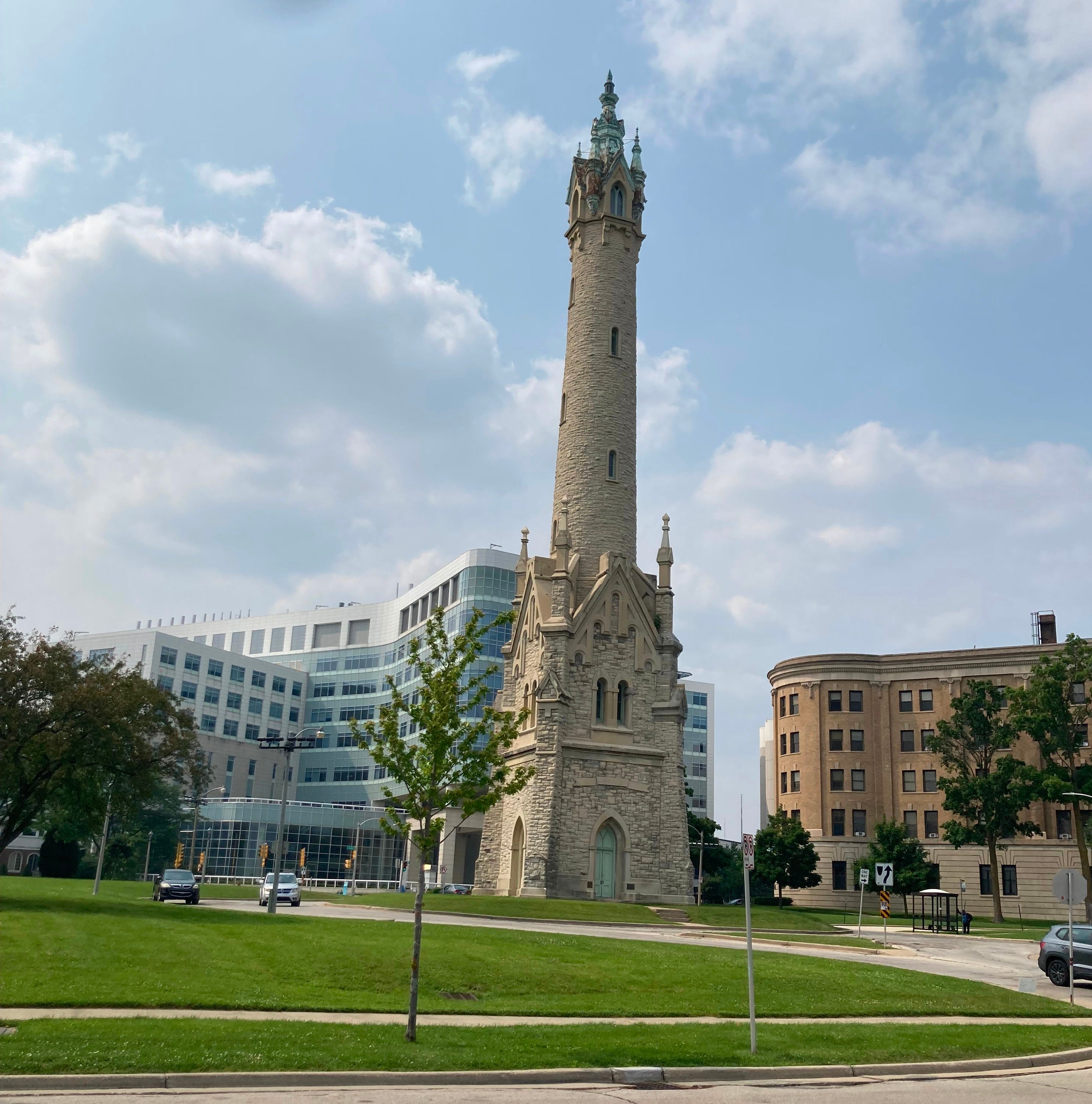
The Nort Point Water Tower, completed in 1874

After visiting Villa Terrace, Megan and Steven would have waited for the bus right about here. It wasn’t until I read Blue Walls Falling Down by Joshua Hren that I learned there was a winding staircase inside this water tower. I’m not sure if visitors are still allowed to climb to the top; dogs most certainly would not be. Besides, Archie was getting tired.

One great thing about dogs—especially other people’s dogs—is that they ask no questions. Thanks for lending him to me, Nancy. We’ll be on our way to the airport to pick you up soon.

Welcome The Stranger

Which of the corporal works of mercy most attracts you?

Recent Reads

Jul 05, 2025

Early in The Bicycle Messenger, Mary Ellen and Charles Hawley learn of the existence of a young relative in need of a home. Seven-year-old Steven has just lost his father to cancer; and according to the silk-stocking attorney who serves as Steven’s guardian ad litem, his birth mother is in no fit state to assume custody.

“This puts you under no obligation, of course,” Mr. Simeon went on. “You are perfectly free to release him to the state’s care.”

“And what would happen to him then?” Mary Ellen asked.

“We would of course exhaust every effort to locate other relatives,” Mr. Simeon replied. “But I can tell you, I think it’s extremely unlikely that we will be successful. If we are not, he would remain in the foster care system until he could be placed for adoption, or until he reaches the age of eighteen.”

Imagine yourself sitting across a polished desk from this man whose cufflinks alone are worth more than your car. What would you do?

I have often been called to welcome the stranger in my life; sometimes I’ve stepped up, and sometimes I’ve hung back. Talk to a new mom on the playground? Definitely a yes. Invite a neighbor who is struggling to find permanent housing to stay in my extra bedroom for a few weeks? Can’t say I ever followed through on that idea. In large ways and small, we all have to discern how to best serve the people closest to us.

According to the USCCB, the corporal works of mercy are feed the hungry, give drink to the thirsty, shelter the homeless, visit the sick and imprisoned, bury the dead, and give alms to the poor. While the directive to welcome the stranger is not listed among them, it can be found in the parable of the sheep and the goats: “I was a stranger, and you welcomed Me” (Mt 25:35). Thus, it is associated with the last judgment and our ultimate place in the kingdom of God. And in practical terms, it maps pretty closely onto the corporal works of mercy listed above.

We all have different charisms that particularly attract us to one or more of these works. Those with the gift of hospitality might excel at lovingly serving the hungry and thirsty, while others who have the gift of consolation might be particularly suited to attend the sick and the dying. In my own writing, I come back again and again to stories of strangers and exiles among us—maybe from guilt, or maybe because of my particular life experiences. Often, it is the missed opportunities or failures that teach us the most.

In The Bicycle Messenger, Mary Ellen and Charles Hawley are called to welcome the stranger into the most intimate relationship of their lives: the family. It wouldn’t be much of a novel if they said no. But as you can probably imagine, Steven’s arrival will change everything.

Which of the works of mercy most particularly speaks to you?

Lately, “Recent Reads” has featured personal essays, but I’m still writing book reviews. You can read my latest, a review of Spare Us Yet by Lucas Smith, in Catholic World Report.

Righteous Among the Nations

A real-life hero appears in The Bicycle Messenger

Recent Reads

Jun 20, 2025

Tadeusz Pankiewicz (photo: Wikipedia Commons)

The Nazis established the Kraków ghetto in Poland in the district of Podgórze in March of 1941, initially cramming some 15,000 people into an area meant to house about 3,000. The previous residents of the district were evicted and given alternate homes or businesses. But one Roman Catholic pharmacist, Tadeusz Pankiewicz, refused to leave: “I understood only too well that the Germans would lose the war, and would destroy my pharmacy, and that I would have to return property that was not mine to its rightful owner or his family when the war ended.”

Pankiewicz was no ordinary man defending his property rights. His business, the “Pod Orłem” or “Under the Eagle” pharmacy, became a locus of communication and aid for the Jewish inhabitants of the ghetto until it was fully liquidated in March of 1943. Pankiewicz’s heroic witness and service to the Polish Jews in the Nazi era would prove to be of incalculable value.

In his memoir of the years he spent among the Jewish detainees, Pankiewicz writes with quiet compassion of the many gatherings he hosted and of the underground intelligence that passed through his pharmacy. “[E]very single room was full of friends, especially in the back rooms, whence it was easy to escape through the exit. It is hard to take in the fact that people managed to do it….” When the ghetto was divided in December of 1942,

The dividing line ran right in front of my pharmacy, which ended up in ghetto B. … [T]he inhabitants of ghetto B were all unemployed, generally poor people with nothing to live on. … They occupied empty flats and deserted buildings. Most of them had never been outside the village where they were born and they had never seen a large city in their lives before. … I tried to approach them to find out more about them, but they were like bears trapped in a cage, endlessly walking the length of the barbed wire fence and begging the passers-by in ghetto A for a piece of bread. … Many of them were barefooted, but it was the middle of winter, there was frost on the ground, it was cold indoors and the water in the pipes had generally frozen.

Pankiewicz received word in January of 1943 that the Germans intended to close his pharmacy, but he did not back down.

I presented my case and was given the necessary papers for the SS und Polizeiführer. I now had it in black and white—the closure of the pharmacy would have a detrimental effect on the health of the ghetto residents, and if the Jews were denied medicine, the ghetto would become a hotbed of diseases and epidemics which not even the ghetto walls or barbed wire could contain.

Pankiewicz’s Catholic faith plays a small but crucial part in the fictional Holocaust narrative embedded in The Bicycle Messenger—a narrative that will eventually illuminate many long-standing questions for the book’s present-day characters. In this brief exchange, a desperate young woman approaches Pankiewicz for a sedative for her mother, who has received a great shock:

My eyes filled with tears. The pharmacist reached across the counter and took my hand in both of his. He looked me right in the face, and then a change came over him. I was sure he remembered me because he looked from me to the baby in my arms.

“Does she cry a lot?” he asked.

“She has terrible colic.”

He nodded again, then he turned to search in the drawer behind him. “If the Gestapo come,” he said, “give her this.”

“What is it?”

“Just a small tranquilizer. It will soothe her so you can keep her quiet until they leave.”

An excerpt from The Bicycle Messenger containing this passage was originally published in Last Syllable. You can find it here or on my website, along with some of my short fiction and book reviews. I look forward to sharing the whole book with you August 4!

It’s Almost Here!

On the long wait

Recent Reads

Jun 06, 2025

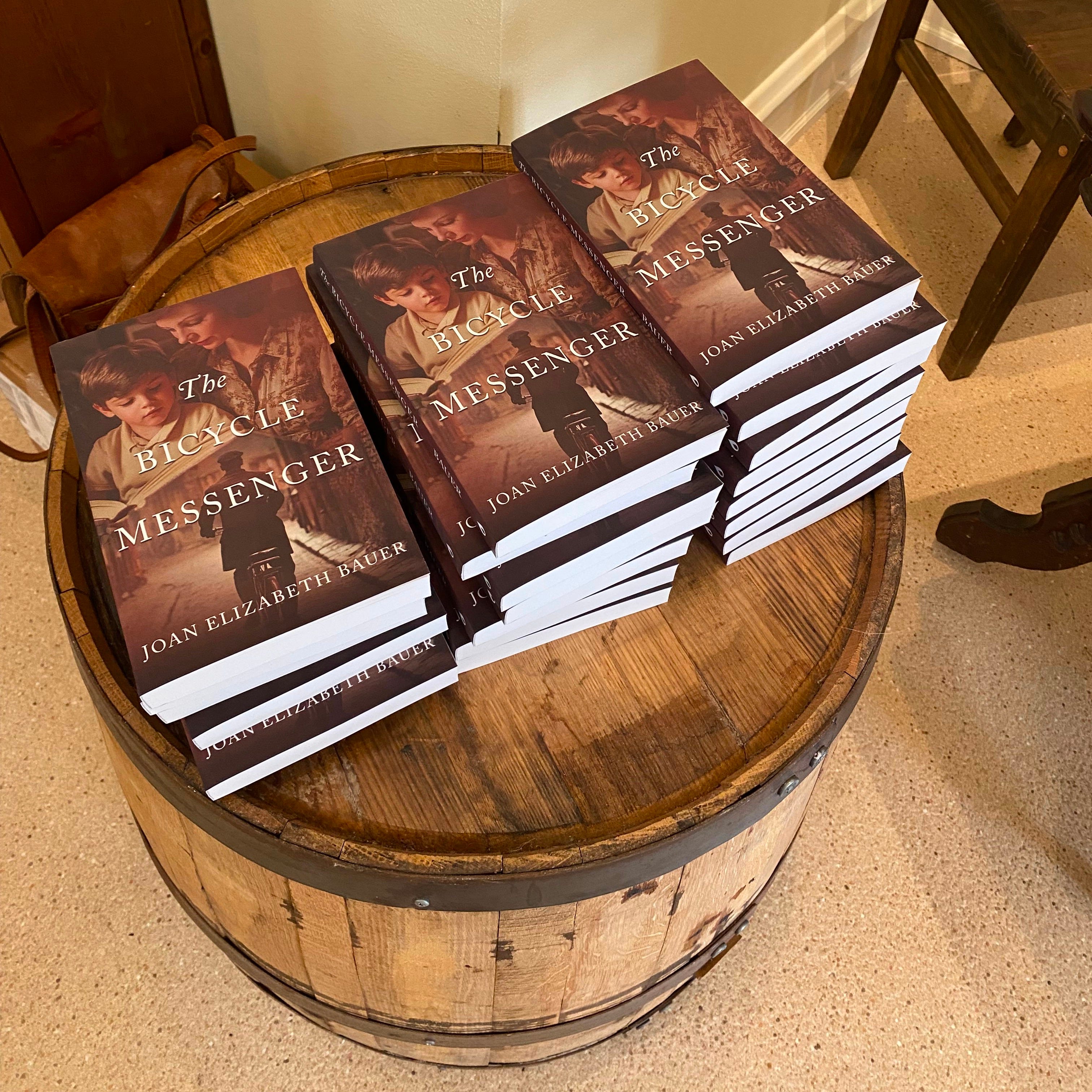
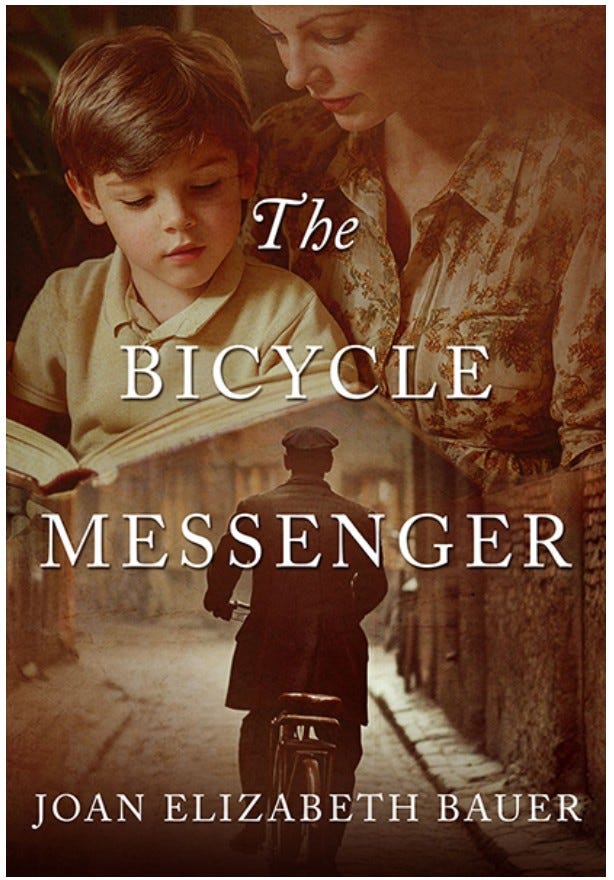
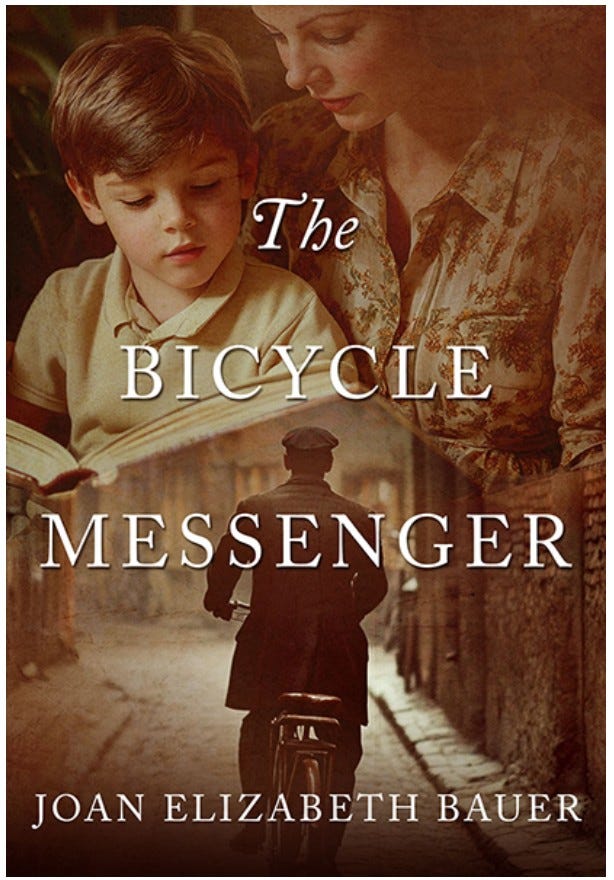
My debut novel, The Bicycle Messenger, releases at the beginning of August! You can preorder the book here to read the first chapter. In the meantime, take another look at this gorgeous cover art designed by the talented Roseanna White:

The book crosses decades and continents. In the 1970s, Charles and Mary Ellen Hawley adopt seven-year-old Steven when his mother, who suffers from schizophrenia, is unable to care for him. Years later, Steven’s quest for the truth about his family of origin plunges him into the dark history of the Nazi occupation of Poland. But first, Steven falls in love—though his own mental illness impinges upon his burgeoning relationship. In this snippet, Steven’s girlfriend Megan becomes increasingly uneasy as Steven recounts a youthful drunken escapade:

Megan was beginning to wish that Steven hadn’t told her these things. The giddy teenager who’d stepped out of the forest like a wood sprite to gloat over past mischief had withdrawn just as quickly as he’d come; but he frightened her as though she had encountered a magical creature, a shape-shifter whose true nature was something dark, wild, and raging.

Who is Steven Hawley, really? And can Megan stick around long enough to find out?

Publishing a novel has been my life-long dream—ever since my mother used to send my childhood scribblings to her brother, a Jesuit priest, for his amusement. My Jesuit uncle visited every year, and once, he brought a friend who taught English at the university level. This dear friend of his sat down with me for half an hour to analyze the opening paragraph of a Nancy Drew knockoff I’d written (“The Case of the Crystal Swan,” complete with illustrations). I was probably twelve. He’d redlined that first paragraph thoroughly. But then he told me: “you have something here. I can feel it.” Imagine that busy Jesuit, a college professor, taking the time to read and analyze the work of his friend’s twelve-year-old niece. Imagine my uncle taking the time to share it with him. All these kindnesses helped me to see myself as a writer speaking to readers when I was young.

Later, when I was in college, I gave a short story of mine to a friend to read. This friend had done a summer writing workshop somewhere—let’s say it was Harvard. I had a terrible crush on him at the time. He smoked way too much and stayed up all night writing plays that were performed on our campus. He wrote songs and played lead guitar in a band. He tried to explain to me that my story had no structure. He took a sheet of paper and drew a straight line interspersed with the occasional little clump of what looked like mashed potatoes. “This is your plot,” he told me. “There’s no rising action, no crisis.”

I wasn’t sure I entirely agreed with that tough critique; and yet I continued to drift, writing mostly in secret. It took me years to develop a voice and find something to say. Thank God for my husband Paul, who listened and read and understood the effort I was making, helping me to improve even as he crafted his own beautiful novels. (You can read more about Paul’s work here). I’ve already told this story about an agent who eagerly read a previous manuscript of mine but ended up wishing the main character would get hit by a bus. I managed to laugh about that one eventually. Still, after a lot more rejections, I started to worry. What if I never found a way to bring my books into the world? Could I be content if no one else read them but God?

When the Song of Songs speaks of the beloved as “a fountain sealed, a garden enclosed,” I think of Mary’s hidden life in Nazareth, of her perfect surrender of her life and her will to the Lord, who is the true reader of hearts. Even if a book is never published, I thought, surely the writing of it under His tutelage would form me in some way to do His will more faithfully.

But as we all know, Mary’s hidden life produced beautiful fruit; and a book, which is also God’s gift, is meant to be read. A book without a reader is like an empty dish, a cup that will never be filled, a garden enclosed that never bears fruit. I’m so grateful to my husband for reading for me all these years. And I love to read and promote the work of contemporary Catholic novelists and poets, because good writers need faithful readers who will bear witness to the beautiful work God is doing in them. Perhaps our job after all is simply to hold out our cups, cracked and flawed though they might be, and trust God to fill them and find the right way to share them. I’m so honored that my debut novel found an award-winning Catholic publisher in Chrism Press. It was well worth the wait. And I give thanks that, with their help, I can soon share the fruits of my own little garden with you.